Home›Coaching for Leaders
Coaching for Leaders
Coaching and sparring for leaders —
effectiveness through clarity and structure.
Attention is the bottleneck leaders have to steer in order to make their areas perform.
Benefit from a coach’s many years of experience and expertise, and from coaching methods tailored to you that develop your leadership skills in a targeted way.
The starting point
As a leader, you decide under uncertainty. Who helps you make the right decisions?
In a leadership role, you are part of a complex system. Superiors and employees have interests of their own. An experienced coach and sparring partner serves as a neutral partner on an equal footing to help you find clarity amid these tensions.
Leadership is a complex task. Depending on the context and on your personal strengths and potential, there are different levers of success for achieving your leadership goals. A professional coach knows the patterns and strategies that make people in leadership roles successful. Leadership coaching helps you recognize connections, prepare decisions and understand your effect on the organization and on your own team. MLI’s experienced coaches support you along the way — individually, with a practical focus and with proven success in companies of different industries and sizes.
Definition
Coaching for leaders — what do we mean by it?
A series of confidential one-on-one conversations in which a leader works on their own cases with an experienced, independent person.
It starts with your biggest current challenge. The success of coaching should be measured against clear goals, not a general feeling. Common coaching goals:
- Leading with confidence. Decisions, conflicts, difficult messages — strategies for the moments of truth in which leadership takes effect in everyday work.
- Putting a new strategy into action. From intention to behavior that the organization actually sees.
- Preparing for a new leadership role. Clarity and structure in the first hundred days, when expectations form that are hard to correct later.
- Effective communication. Blind spots only become visible from the outside. Motivate people and bring them along with situational leadership behavior.
- Preparing important decisions thoughtfully. Not deciding faster, but so that decisions are well founded and carried by everyone affected.
- Leading with a system. Clear positioning, unambiguous responsibilities, a focus on results and a shared rhythm.
What drives us: helping people in leadership roles become effective, so that they achieve more with less stress.
Target group
Who is coaching for leaders suited to?
For people in positions of responsibility — from the top executive to the person leading for the very first time.
Top executives
Board members, managing directors, division heads. What they need is rarely expert advice, but a counterpart without an agenda of their own.
Experienced leaders
When previous recipes for success no longer hold because the requirements have changed, or the team has.
New to a leadership role
Promoted for strong expertise, grown into leadership. The demands differ from those for which one was recognized.
Whether coaching is the right next step is best clarified in a personal conversation. We will also tell you when other steps would be better — for example conflict mediation or a team workshop.
Effectiveness
How effective is coaching for leaders, and why?
Because the person assigned fits the topic, not the availability. From more than a hundred coaches in the network, the choice is made by need, not by calendar.
Coaching is a broad field. The formats are varied and depend on the challenge: strategy coaching and sparring for top executives, work on one’s own stance in critical situations, team coaching for management teams that want to work together effectively. The goal also determines whether you meet in person or work together virtually. Six principles always apply:
Trust is our currency
The content of your coaching conversations is, of course, treated in strict confidence unless you as the coachee expressly wish it to be shared.
Lasting effect
We make sure the results of coaching can be put into practice. This always includes a follow-up to check effectiveness.
Relevance
Depending on your biggest current challenge, you will find a suitable partner — for example in positioning, strategy, change, communication, team development, resilience, sales or self-leadership.
Quality assurance
Ongoing supervision and training. Everyone who works in the MLI network continuously improves their own effectiveness.
Practical relevance
What our experts and coaches pass on to others, they have experienced and applied themselves. Most coaches also have recognized areas of specialization.
Personal fit
Leaders choose their coach themselves from an approved selection. If the chemistry is not right, you switch at no extra cost.
Feedback
What clients say.
For us as management, Sebastian Morgner is like a highly competent, well-meaning friend who accompanies us on our transformation.
Andreas Kuhndörfer combines systemic thinking, a gift for cooperation and new ideas with a strong focus on goals. I value our work together very much.
Sebastian Morgner is incredibly structured and data-driven and never loses sight of the big picture. A real asset.
The network
A selection of our leadership coaches
Who works on your case is decided by the topic. You see every proposal with a profile and a rationale before anything is fixed.
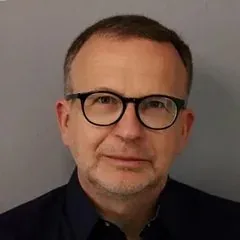
Andreas Kuhndörfer
Senior executive coach, expert in strategy & corporate development
- More than 20 years as an executive in global corporations, including Group CHRO and Head of Strategy
- Member of the Executive & Professional Education Board of the TUM School of Management
- Focus on strategy development and execution

Sebastian Morgner
Entrepreneur, leadership coach and strategy coach
- Executive advisory and top executive coaching since 2011
- Leadership experience in a global corporation, most recently Global Head of Marketing at UniCredit in Milan
- More than 60 strategic transformations accompanied
- Author of Expedition Zukunft, host of the podcast Tiefgang
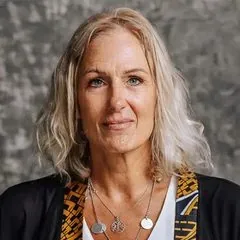
Nina Zitouni
Expert in personal development & communication
- Leadership development, team and conflict management, courage as a competence
- Transactional analysis, gestalt therapy, communication in change processes
- Leadership experience as a project manager in international companies
- Some 20 years in coaching and communications consulting
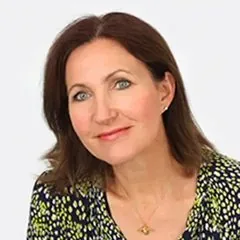
Sue De’Ath
Senior executive coach, Windsor, England
- Founding partner of the international management consultancy THE BRIDGE
- Clients in pharmaceuticals, finance, sports and automotive
- Leadership experience at the BMW Group in HR and Learning & Development
- Leadership & team coach
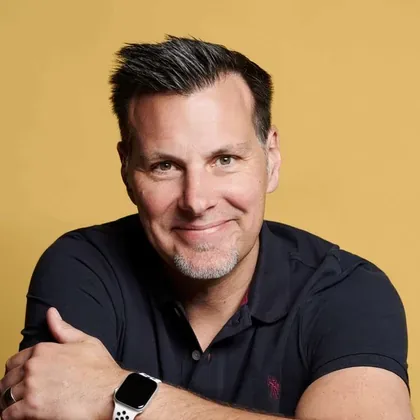
Marc Buchholz
Leadership coach and trainer for sales psychology, resilience and self-management
- Ten years of professional and leadership experience in sales and marketing, previously eight years in international five-star hospitality
- Self-employed since 2010 as a certified business trainer, coach and facilitator

Kristin Bub
Culture change, mindful leadership and resilience
- Business psychologist, formerly Global Senior HR Development Manager at Webasto, responsible for culture transformation and talent management
- Lecturer at FOM University of Applied Sciences and at Witten/Herdecke University
- Trained mediator
- Expertise: decision culture, collaboration under pressure, conflict resolution
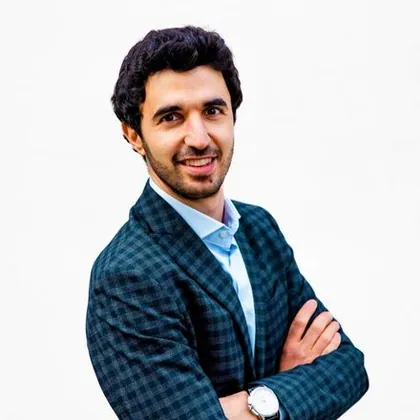
Gianmichele Potito
Peak performance, mental resilience and neuroscience
- Executive coach in more than ten countries, previously M&A manager and senior project manager for corporate development at Dr. Oetker, research at IESE Business School
- Mental coach on the WTA tour
- Expertise: sustained peak performance, mental strength from competitive sports applied to management

Stefanie Junghans
Expert in leadership & organizational change
- Head of Organizational Development at SAP S/4HANA, in shared leadership
- Culture and people initiatives to foster diversity
- Introduction of agile goal management with OKR, including execution
- Team development and individual coaching with a focus on self-organization

Brigitte Deden
Senior executive coach, focus on Asia
- Specialized in the Asian cultural sphere and Europe
- 14 years of international coaching experience in Singapore and Germany
- 13 years as a management consultant at Accenture in Germany, England and Singapore
- Certificates from Henley Business School, NeuroLeadership Institute, Newfield, Academy of Executive Coaching, Institut für Schematherapie
Benefits
What are the benefits of coaching for leaders?
For the person coached, for their team and for the company.
Stronger leadership competence
Understanding one’s own mechanisms of impact and using them deliberately rather than relying on routine.
Greater motivation in the team
An environment in which people contribute, and stay.
More performance
Individual and collective performance rise when attention is directed to what matters.
Conflicts that get resolved
Handling leadership challenges and conflicts with confidence rather than administering them.
Professional development
Shaping one’s own career deliberately rather than letting it happen.
Capacity to act in crises
Shaping change and crises, even when not all information is available.
Methods
Which coaching methods are there?
From one-on-one conversations and role work to on-the-job coaching — chosen according to the situation, not the coach’s preference.
- Active listening and targeted questions
- Feedback and self-reflection
- Goal setting and action planning
- Developing a personal target picture and self-understanding
- Building a strong narrative for one’s own area of responsibility
- Selecting effective leadership tools and defining strategies for using them in practice
- Mentoring and advice
- Conflict work and communication training
- Work on emotional and social competence
The coachings are as varied as the leadership personalities and their tasks. What connects them is the foundation: an approach grounded in behavioral science rather than rules of thumb.
Our approach
Neurosocial leadership: why behavior has more effect than intention.
In coaching, leaders recognize which factors put themselves and their employees into a high-performing state, and which have the opposite effect.
The thesis
Eighty percent of an organization’s performance is determined by social dynamics and the prevailing work culture. Any leader who wants to win support for strategic goals cannot ignore human perception and the neurocognitive processes connected with it.
Source: McKinsey, Strategy Beyond the Hockey Stick, 2018.
The conclusion
Employees take their cue from their leaders’ behavior, not from their intentions. Leadership acts on three levels at once: the factual, the personal and the group-dynamic.
The target state is poised composure — inner clarity and outer structure as one. A stance that creates credibility and commitment among employees.
Where leadership takes effect
Leadership at the center, seven social dynamics around it
Where the approach reaches its limits
Neurosocial leadership explains why people in organizations behave the way they do. It does not replace the question of whether the strategy is right. And it helps only to a limited extent against a problem that lies in the structure.
For HR leaders
The MLI coach and expert portal
One contract, one contingent, one invoice, even when twenty executives work with eight different coaches.
- An agreed contingent of coaching hours, simple invoicing
- You approve the selection offered to your executives
- Every coach introduced with a short video and competence profile
- Scheduling directly between coach and coachee
- A free first conversation for every executive
- Regular reports on utilization and satisfaction, without content
You receive your access after the first free consultation.
Process
How coaching for leaders works at MLI.
The coaching process from the leader’s perspective — in six steps.
- You receive a link. It leads to a preselection of coaches and experts made by your company. No login, no password, no onboarding.
- Profiles with an introductory video. Every coach has a competence profile and a short video. Ninety seconds say more about fit than three pages of résumé, and fit is exactly what the choice is about.
- You choose one to three favorites. One of the coaches or experts then reaches out to you personally to arrange a first meeting — two, if you wish.
- You clarify the assignment in the first meeting. What it is about, what will be worked on, what the approach looks like. Only then does the mandate begin.
- Work is done on a contingent. Seven hours are usually set aside to begin with. As the coachee, you decide on dates, rhythm and format together with your coach or expert.
- Switching remains possible. If the chemistry is not right after the first meeting or your topic changes, you choose again at no extra cost. This also applies later on.
Questions and answers
FAQ: Coaching for leaders
Short answers to the questions that come before every engagement.
Can coaching for leaders be booked anywhere in Germany?
Yes, MLI Leadership Institut offers coaching for leaders throughout Germany, and on request internationally and online as well. In addition to sessions at your company, individual conversations at a neutral location often make sense — they make it easier to gain mental distance from day-to-day business.
What are the benefits of coaching for leaders?
Stronger leadership competence, greater motivation and retention in the team, higher performance, conflicts resolved rather than administered and deliberately shaped professional development. Think of coaching as an investment whose result can be checked against the goals agreed at the outset.
How long does coaching for leaders take?
A customary scope is 7 hours per person: a first meeting and five to six working sessions over about nine months. When someone takes up a new role or is in the middle of a transformation, ten to twelve hours make sense. The scope is set per person, not as a flat rate for everyone.
What does coaching for leaders cost?
The first meeting is free of charge. After that, a single hour costs€330 per hour; a contingent of 7 hours comes to€2,200. At C-level, the rates are€450 per houror€2,900for 7 hours.All prices plus VAT. Daily rates are based on eight hours. No travel expenses are charged within the Munich metropolitan region; outside it, at cost and against receipts.
How soon do first results appear?
That depends on your goals and your commitment. Many leaders report greater clarity and concrete strategies for action after only a few sessions. Behavioral changes that the team notices take longer — usually several months.
What does a typical coaching process look like?
It begins with a free first conversation about your goals and expectations. Once the coach has been chosen, concrete goals and an approach are set. Sessions take place regularly and can be adjusted flexibly. The complete process is described further up on this page.
Why does individual coaching for leaders make sense?
Because every leadership situation is different. A standard program hits half the target at best. Individual coaching works on the cases that are actually on your desk, and that is also where the result can be measured.
Which challenges can coaching address specifically?
Leading teams in times of change, developing a strategic direction, deciding under uncertainty, working through conflicts in the leadership circle, settling into a new role. What coaching cannot do: solve a problem that lies in the structure — where goals contradict each other or decision-making authority is missing, we say so in the first conversation.
The next step
A trial access says more than any description.
We set up a sample selection in the portal so that you can see what your executives would see. Without obligation and at no cost.
30 minutes
Personal conversation
A first meeting, an exchange about your needs, not a sales pitch. Choose a time directly in the calendar, with no intermediate step and at no cost.
Choose a timeFive fields
Contact by e-mail
Describe your topic briefly: one or two sentences are enough. We reply within two business days.
Prefer to talk? +49 8807 244446-0
PDF · 21 pages
Institute dossier
Methodology, survey instrument, reference architectures, fee models and network profiles — for forwarding internally when an initiative still needs to be justified.
Download the dossier